
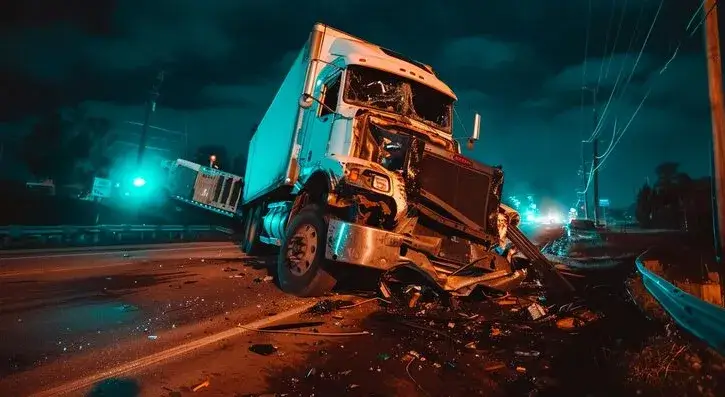
Truck crashes with uninsured drivers leave you exposed and angry. One moment you are on the road. The next you face hospital bills, missed work, and a damaged truck. Then you learn the other driver has no coverage. Alabama law gives you options, but the process is strict and confusing. You must move fast, document everything, and protect your rights from the first phone call. Insurance companies count on your stress and confusion. They know many people give up or accept less than the law allows. You do not have to face this alone. A Birmingham truck accident attorney can explain your choices, guide each step, and stand between you and unfair delay. This guide shows how uninsured truck accident claims work in Alabama, what proof you need, and how to avoid mistakes that cost you money and peace.
Know how Alabama treats uninsured truck crashes
Alabama requires drivers to carry liability insurance. Many still drive without it. When a truck driver has no coverage or not enough coverage, you may need to use your own policy. You may also need to sue the driver. Alabama follows fault rules. The driver who caused the crash must pay. Yet if that driver has no insurance, collection becomes hard.
You must also know that Alabama uses pure contributory negligence. If an insurer proves you shared even a small part of the blame, you may receive nothing. This rule gives insurers strong reason to fight your claim. Clear proof of fault becomes your shield.
Use your own uninsured and underinsured coverage
Many drivers carry uninsured motorist and underinsured motorist coverage. These parts of your policy can pay when the truck driver has no coverage or too little. Alabama sets rules for these claims that you must follow.
First, you must show the other driver caused the crash. Second, you must show that driver had no policy or not enough coverage to pay your losses. Third, you must follow your policy steps for notice and proof. Missing a deadline can destroy your claim.
The Alabama Department of Insurance explains state insurance rules and complaint steps at https://www.aldoi.gov. You can use this site to confirm company contacts and learn about coverage terms.
Steps to take right after the crash
Your actions in the first hours shape your claim. Focus on three tasks.
- Protect health
- Protect evidence
- Protect your claim
First, call 911. Ask for police and medical help. Even if you feel fine, ask for a check. Some injuries hide for hours.
Second, gather proof if you can do so safely.
- Take photos of both vehicles, the road, and your injuries
- Get names and phone numbers of witnesses
- Exchange information with the truck driver
- Ask the officer how to get the crash report
Third, contact your insurer as soon as you can think clearly. Report the crash. State that you believe the truck driver caused it. Say that you think the driver has no coverage or not enough coverage. Keep your account short and calm.
Document every loss
Insurers pay based on proof. You need clear records of three main types of loss.
- Medical treatment
- Income loss
- Property damage
Save these records.
- Hospital and clinic bills
- Prescription and medical supply receipts
- Work schedules and pay stubs that show missed time
- Repair estimates and photos of your truck
Also keep a simple daily log. Write down pain, limits on movement, and missed family events. Use plain words. Dates matter. This log can support your claim for human losses that do not show on a bill.
Understand who may pay
Uninsured truck cases often involve more than one possible source of payment. You may have claims against:
- The truck driver
- The trucking company
- Your own insurer under uninsured or underinsured coverage
The table below gives a simple comparison.
| Possible source | When it may apply | Main challenge |
|---|---|---|
| Truck driver | Driver caused crash and has personal assets | Driver often has few assets to collect |
| Trucking company | Driver acted on the job or truck had unsafe parts | Company may deny fault or blame you |
| Your uninsured coverage | Other driver has no policy | Your own insurer may fight the amount of loss |
| Your underinsured coverage | Other driver policy is too small for your losses | You must prove both fault and size of your losses |
Deadlines and legal limits
Alabama sets time limits for lawsuits. In many traffic injury cases you have two years from the crash date to file suit. Some claims have shorter limits. Some claims against public bodies follow special notice rules. If you wait, you risk losing every claim.
Separate from lawsuits, your own policy may set shorter notice times. These contract rules can matter as much as state law. Read your policy. Ask clear questions. Get every answer in writing.
The Alabama Judicial System provides access to state court rules and forms at https://judicial.alabama.gov. You can use this site to learn how civil cases move through the courts.
Common traps in uninsured truck claims
People often fall into the same three traps.
- Talking too much to insurers
- Accepting fast low offers
- Waiting to seek legal help
When an insurer calls, stay calm. Give basic facts. Do not guess about speed, distance, or fault. Do not agree to a recorded statement without legal advice.
Be careful with early settlement checks. Once you sign a release, your claim ends. New medical problems will not bring more money.
When to ask for legal help
You can handle some property damage claims alone. Injuries change that. If you face hospital care, long pain, or lost work, then you face complex proof rules and harsh fault rules. Early legal help can protect you.
A lawyer who handles truck crashes in Alabama can:
- Review your policy for uninsured and underinsured coverage
- Gather police records, camera footage, and witness statements
- Work with your doctors to explain long term needs
- Negotiate with your insurer and the trucking company
- File suit when needed before the deadline
Uninsured truck crashes leave deep marks on your body, your work, and your family. Alabama law gives you paths to recovery. You protect yourself when you act fast, keep strong records, and demand fair treatment under your policy and state law.