
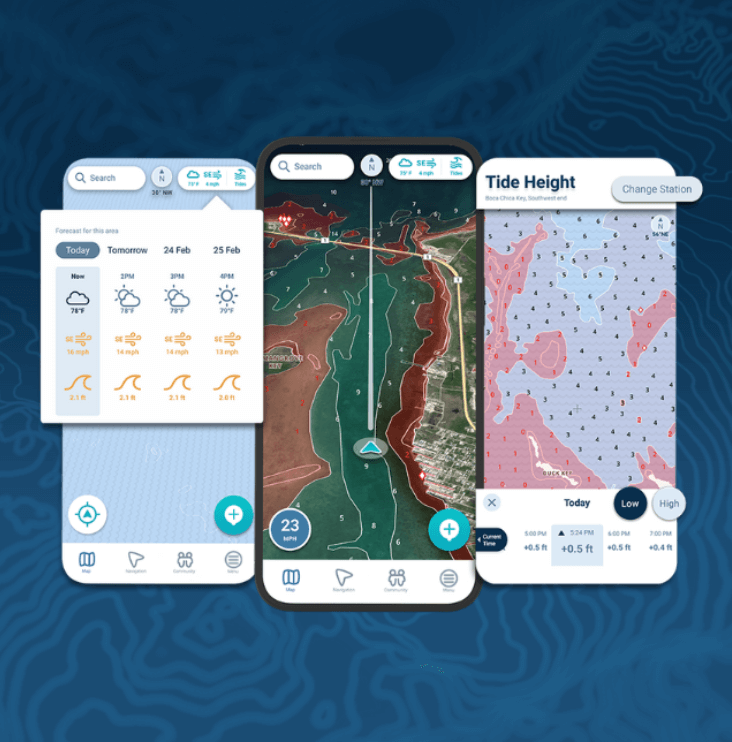
Modern boating depends less on individual gadgets and more on how well those devices communicate with each other. Many captains who once defaulted to Navionics now recognize that newer systems are redefining connectivity across chartplotters, sonar units, radar modules, and autopilot controls. This shift is why navinoics alternatives best solutions are becoming a central topic among serious boaters looking for more responsive and unified navigation setups. By focusing on seamless data sharing, these platforms allow information to move fluidly between helm displays, mobile devices, and onboard computers without manual syncing. For boaters navigating the challenging and busy waters around San Diego, where traffic density and changing currents demand constant attention, advanced integration is essential rather than optional. Choosing navinoics alternatives best options gives operators more control over route planning, situational awareness, and system customization. A detailed breakdown of current top solutions can be found at navinoics alternatives best.
What Modern Integration Really Looks Like Aboard A Vessel?
Integration today means creating a cohesive network where every device works as part of a larger navigation ecosystem. Instead of isolated screens showing fragmented data, modern systems allow route updates, depth readings, speed information, and AIS signals to appear consistently across multiple displays. This unified structure ensures that adjustments made at the helm instantly reflect on companion apps or secondary consoles.
For example, a captain steering through San Diego Harbor can update a travel path on a tablet below deck and see it synchronized on the primary navigation display without interruption. This level of coordination improves decision-making speed and reduces the possibility of miscommunication during critical moments.
Why New Alternatives Offer Superior Device Compatibility?
One of the strongest arguments for switching lies in the architecture of newer systems. Many navinoics alternatives best platforms use open integrations that support multiple hardware brands. This flexibility allows boaters to connect advanced fishfinders, chartplotters, and weather radars without being restricted to a single manufacturer.
A practical benefit appears when pairing these systems with autonomous steering tools. Adjustments made to the navigation route instantly translate into autopilot corrections, ensuring safer and more efficient cruising. For frequent boaters in San Diego, this compatibility becomes essential when transitioning between offshore excursions and tightly packed marina maneuvering.
Real Use Case From Day To Day Coastal Travel
Consider a recreational boater who regularly departs from San Diego for short coastal exploration. Previously relying on disconnected navigation components, the boat owner struggled with delays when transferring updated routes and depth charts. After installing an integrated navigation alternative, all devices communicated in real time. Radar overlays, GPS positioning, and tidal projection data worked together, providing precise situational awareness during foggy mornings or crowded weekends.
Instead of switching between screens or manually syncing charts, the boater had centralized control and improved visibility. This reduced stress and increased overall safety during every voyage.
Cloud Connectivity And Mobile Accessibility
Another crucial feature of modern systems is cloud-based support. Routes can be created at home, saved digitally, and pushed directly to boat displays before departure. This makes planning more efficient while allowing adjustments based on changing weather conditions.
For boaters in San Diego who frequently split time between docks and offshore waters, mobile integration supports flexible planning. A route created from a smartphone at the marina café can appear on onboard displays within moments. This connectivity also supports trip analysis and historical path review for improved future navigation decisions.
Strategic Hardware Pairing For Enhanced Performance
To fully benefit from advanced navigation integration, it is important to pair it with reliable hardware. A quality multifunction display or marine-grade chartplotter ensures smooth communication with connected devices. An excellent source for professional marine equipment is West Marine, offering products engineered for seamless connectivity and durability in harsh conditions.
Using devices that support robust communication protocols maximizes the performance of navinoics alternatives best systems without introducing compatibility issues or performance delays.
Location Driven Navigation Enhancements
Advanced platforms now include region-specific mapping improvements and safety alerts. For the San Diego area, this includes harbor construction warnings, updated depth contours, and precise tidal forecasting. These enhancements reinforce why navinoics alternatives best solutions are increasingly being adopted by those operating in complex navigational zones.
Localized integration ensures better responsiveness to real time changes in currents and restricted zones. This allows boaters to make informed choices quickly without relying on outdated or generalized data.
Long Term Value And Future Readiness
One of the most overlooked advantages of modern alternatives is their ability to adapt over time. Instead of replacing entire systems, users receive ongoing updates that expand device compatibility and enhance functionality. As new marine technology becomes available, these systems simply evolve alongside it.
This adaptability makes navinoics alternatives best solutions a smart long-term investment. Boaters no longer need to overhaul hardware every few years. Instead, they benefit from incremental upgrades that maintain cutting-edge capability while controlling costs.
Final Thoughts
The integration capabilities of modern navigation technologies have transformed the boating experience. Through intelligent data sharing, seamless device communication, and location-specific enhancements, navinoics alternatives best platforms deliver a more efficient and responsive system for navigating demanding environments. For boaters in San Diego and similar high-traffic coastal regions, this transition represents more than convenience. It represents a safer, more reliable, and future-ready approach to marine navigation.