
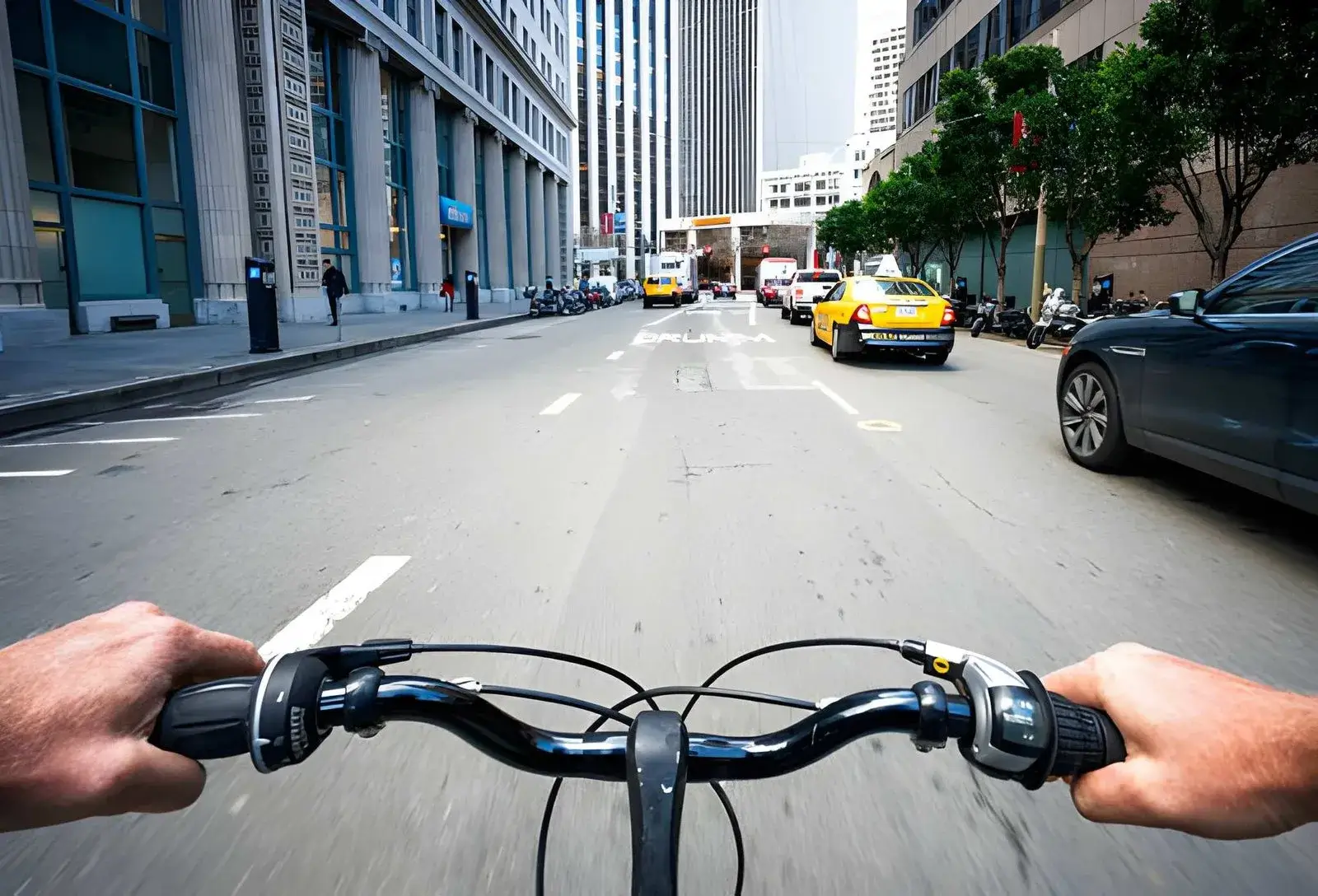
If you were hit while riding your bike, your mind is probably racing. You may be dealing with pain, a damaged bike, missed work, and a driver or insurance company already trying to shape the story. That stress gets worse when people assume the answer is simple. It usually is not. If you are searching for a bicycle accident attorney near me, it is important to know that in many San Francisco bicycle accidents, the driver is at fault. In others, fault is shared. In some cases, the cyclist may carry most of the blame. What matters is the evidence, the traffic rules, and what actually happened in the seconds before the crash.
California law gives cyclists many of the same rights and duties as drivers. That means a driver who speeds, turns across a bike lane, opens a door into traffic, or fails to yield may be liable. It also means a cyclist who rides against traffic, ignores a signal, or leaves a safe path without warning can face a fault argument too. If you are sorting through a bike crash claim, the question is not whether drivers are always at fault. The real question is how fault is proven and how that affects your recovery.
Fault in bicycle accidents depends on conduct, not assumptions
A lot of bike crashes happen because a driver was careless. A right hook at an intersection, a left turn across a rider’s path, distracted driving, unsafe lane changes, and dooring are common examples. California drivers have a duty to watch for cyclists, give space, and share the road safely. The California Driver Handbook rules of the road spell this out clearly, including the need to check for bikes before opening a vehicle door or turning.
That does not create automatic fault in every case. Insurance adjusters look for any fact they can use to reduce what they pay. If a cyclist was riding at night without lights, weaving between cars, or entering an intersection against a signal, that will come up fast. You can be badly hurt and still be assigned part of the blame. That is one of the hardest parts for injured cyclists to hear, especially when a driver’s mistake feels obvious.
California follows comparative fault. If a driver is 80 percent at fault and you are 20 percent at fault, your compensation can be reduced by 20 percent. That rule matters in nearly every bicycle accident fault dispute because both sides often tell very different versions of the same crash.
California bicycle laws shape how liability is assigned
State law treats cyclists as road users with rights and responsibilities. Under the California Vehicle Code, riders generally must follow the same traffic signals and rules that apply to drivers, with some bicycle-specific exceptions and protections. You can review the governing statutes in the California Vehicle Code provisions for bicycles.
That legal framework affects how claims are decided. A driver who says, “I did not see the cyclist,” is not off the hook. Failing to see a rider who was there to be seen can still be negligence. A cyclist who says, “Cars should have watched out for me,” may still face questions if they rode unpredictably or broke a traffic rule. Liability turns on details like lane position, speed, visibility, signals, road markings, and witness accounts.
San Francisco adds another layer because its streets are dense, hilly, and busy. Parked cars create dooring risks. Protected lanes begin and end. Delivery vehicles stop where they should not. Tourists and rideshare drivers make sudden turns. A crash on Market Street does not unfold the same way as a crash on a suburban road. That is why blanket statements about fault usually fall apart once the facts come in.
Shared fault is common in bike crash claims
Picture a rider moving straight through an intersection in a bike lane while a driver turns right across that lane without checking mirrors. That often points strongly to driver fault. Change one fact and the picture shifts. If the cyclist was passing on the right at high speed outside the marked lane, or entered after the light changed, the defense will argue shared blame.
The same thing happens in dooring cases. A driver who opens a door into a cyclist’s path may be clearly negligent. If the cyclist was riding far outside the bike lane when a safe lane was open, the insurer may argue comparative negligence. Those arguments do not always win, but they affect settlement value and trial strategy.
This is where documentation matters. Photos, helmet cam footage, street camera video, damaged gear, medical records, and witness names can make the difference between a weak denial and a strong claim. A personal injury lawyer handling a bicycle collision case will usually focus on preserving that evidence before it disappears.
Key differences in how fault is evaluated after a bicycle collision
| Issue | Driver Mostly at Fault | Cyclist Shares Fault |
|---|---|---|
| Intersection turn | Driver turns across bike lane or fails to yield | Cyclist enters against signal or rides unpredictably |
| Dooring crash | Driver or passenger opens door without checking | Cyclist was riding outside a safe available path |
| Visibility at night | Driver ignores visible cyclist or drives distracted | Cyclist has no required lights or reflectors |
| Lane use | Driver makes unsafe lane change into cyclist | Cyclist suddenly leaves lane without warning |
| Compensation impact | Higher recovery if driver holds full or primary fault | Recovery reduced by cyclist’s percentage of fault |
What you can do right after a bicycle accident
Get medical care and follow through. Adrenaline hides injuries. A wrist fracture, concussion, or soft tissue injury may not feel serious at the scene. Medical records also connect the crash to your injuries, which becomes critical when insurers question treatment later.
Preserve the evidence before it disappears. Take photos of the bike, the vehicle, the street, skid marks, lane markings, and your injuries. Save your helmet, clothing, lights, and repair estimates. Get names and numbers for witnesses. If nearby businesses or homes may have video, act quickly.
Be careful with statements and insurance contacts. Give basic facts to police, but do not guess about speed, distance, or fault. Do not minimize your injuries just to be polite. If an adjuster calls early, remember they are building a file. In many bike accident cases, a rushed recorded statement creates problems that last for months.
You do not need to accept a simple blame story
Drivers are not always at fault in San Francisco bicycle accidents, but they often are when they fail to yield, turn carelessly, drive distracted, or ignore the space cyclists need. Shared fault is common, and insurance companies use that aggressively. If you were hurt, the right response is not to assume blame or accept the first version of events. It is to protect the facts, protect your health, and get clear advice about your options.
If you are dealing with a bicycle crash and the fault question is already being used against you, speak with a personal injury lawyer and get a careful review of what happened.